Key Bed Bug Facts
Bed Bug Appearance & Behavior:

Adult bed bugs are oval-shaped and flat, roughly the size of an apple seed. They cannot fly but are fast runners and, while favoring humans, can feed on pets.
Types: The primary types are the common bed bug (Cimex lectularius) and the tropical bed bug (Cimex hemipterus).
Lifespan & Breeding: They can live up to 10 months to a year. Females can lay 1–10 eggs per day and 200–500 in their lifetime.
Feeding: They can survive for months without feeding, with some reports citing up to 70 days or more.
Habitats: Common in homes, hotels, apartments, and transportation; they are not attracted to dirt, but to blood meals.
Bed Bug Life Cycle
Bed bugs multiply rapidly, with a single female laying 1–7 eggs daily and up to 500 in her lifetime. Eggs hatch in 6–10 days, and nymphs reach reproductive maturity in about 4–6 weeks, allowing the population to double every 16 days under favorable conditions. A minor infestation can grow to thousands in 3–4 months.
Adult bed bugs typically live for 6 to 12 months, though some can survive over a year with regular feeding and moderate temperatures. They are highly resilient and can survive for 3 to 5 months without feeding in warm conditions, or up to 400+ days in cooler, dormant states.
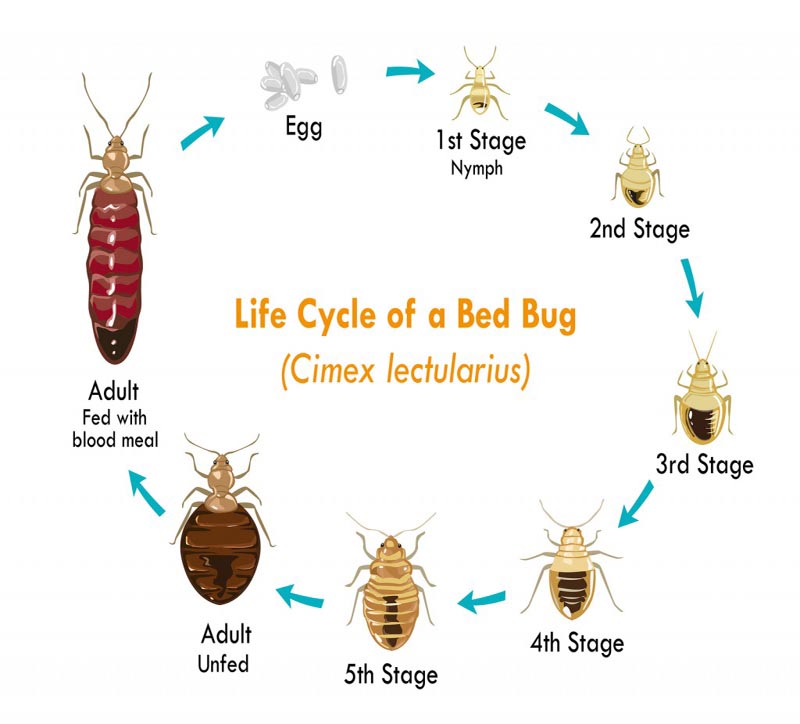
Bed bugs are small, flat, reddish brown parasitic insects (approx. 5mm) that feed exclusively on blood, typically at night, causing itchy bites and potential allergic reactions.
They hide in mattresses, furniture, and clutter, often spreading through luggage or used items. Effective control involves professional extermination, high-heat cleaning, and protective mattress encasements.
Signs of Infestation

Bites: Small, itchy, red bites, often appearing in lines on exposed skin (face, neck, arms, hands).
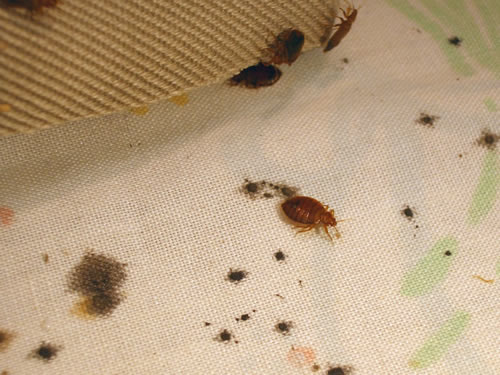
Stains/Odor: Rusty-colored blood spots on mattresses or sheets.
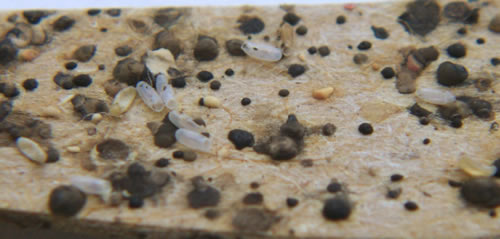
Physical Signs: Live bed bugs, shed skins (exoskeletons), and tiny white things around your bed, most likely bed bug eggs or shed exoskeletons.
Management and Treatment
Physical Controls: Use a strong vacuum for cracks and crevices. Use zippered, bed-bug-rated encasements for mattresses and box springs.
Professional Help: Contact a professional pest control service as they are difficult to eliminate alone.
Freezing: Items can be placed in a freezer at for at least 4 days to kill them.
Common Misconceptions
They are not only found in dirty places; they can live anywhere (including 5-star hotels).
You do not necessarily have to throw away all furniture; many items can be treated.
Bed bugs do not transmit disease, despite being parasites.
Brief History of the American Bed Bug
Bed bugs were present in Europe and Asia for over 3,000 years and once the bed bug had reached England it wasn’t long before it hitched a ride on a ship bound for North America. Bed bug encounters in European colonies were very common. From here, it was all downhill for Americans. No totally effective extermination technique was available. In 1930, the use of electric heating became popular and bed bug numbers soared. It was reported that one in three homes in North American cities had bed bugs.
Bed Bugs Nearly Eradicated
In 1950, DDT was discovered and used to control diseases during WWII. By 1950, it was used for extermination purposes. DDT proved to be extremely effective in eliminating bed bugs–so much so that the population diminished almost entirely for a few decades!
The Comeback Bed Bug
In the 1970s, DDT and other effective chemical treatments like chlordane and diazinon were banned for health and environmental reasons. Bed bugs were once again on the rise in the 1980s and by the 1990s the bed bug population had made a full comeback.
The Bed Bug Today
According to a survey by the National Pest Management Association and the University of Kentucky, calls to pest control companies regarding bed bugs have tripled in the past decade! Taking precautionary measures against bed bugs is the best way to protect you and your home from an infestation. Know where you can find them and how to check for them in your bed.
We’re no stranger to bed bugs and the home extermination process. If you think you’ve detected even just a few bed bugs in your home, schedule a service with us! Stop these pests before they have the chance to infest your home.