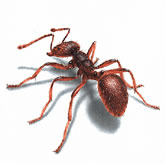
Destructive ants
Destructive ants cause significant property damage by hollowing out wood(carpenter ants), chewing through electrical wiring (Singapore ants), or harming landscaping (fire ants / bighead ants)Top offenders include Carpenter ants, which ruin structural timber, and Fire ants, which are dangerous to humans/pets. Key damage signs include sawdust-like piles, buzzing in walls, and damaged plants.
Key Destructive Ant Species
Carpenter Ants (Camponotus):
The most damaging to homes. They excavate wood to create nests, preferring moist or damaged wood, which can cause significant structural damage over time.
Singapore Ants (Trichomyrmex destructor):
A highly invasive, aggressive species that damages infrastructure by chewing through electrical wires, plastic, and communication cables.
Fire Ants (Solenopsis):
Known for severe, painful stings, they also damage electrical boxes, air conditioning units, and garden plants.
Bighead Ants (Pheidole):
These create large colonies that can disrupt lawns, landscaping, and, in some cases, damage foundations with their tunneling.
Argentine Ants :
They are agricultural pests that protect plant-damaging insects like aphids and mealybugs, which in turn destroys landscaping and garden foliage.
Common Signs of Infestation
Wood Damage: Small, smooth, hollow tunnels in wood (different from termite damage, as it is clean).
Frass: Piles of fine, sawdust-like material, which may contain insect parts.
Swarmers: Winged ants appearing inside the home, especially in spring.
Rustling Sound: A faint, dry rustling sound within walls or wood.
Electrical Issues: Frequent, unexplained issues with appliances or wiring (often caused by Singapore ants).
Prevention and Management
Eliminate Moisture: Fix leaky pipes, roofs, and improve ventilation to prevent decay, which attracts carpenter ants.
Remove Wood Sources: Store firewood away from the house and remove stumps or dead trees.
Seal Entry Points: Use caulk to seal cracks in the foundation and gaps around doors and windows.
Maintain Landscape: Trim branches and shrubs that touch the house.
Chemical Control: Use bait stations to target the entire colony, including the
Key Facts About Ants
Fact #1: Colonies are bigger than the average ant farm.
Ant colonies come in literally all shapes and sizes. A few species live in colonies of only a few dozen ants; however, the average ant colony contains thousands of individual ants. Smaller colonies live in natural crevices or openings while larger colonies create vast nests and forage for supplies and food. There are also super colonies around the world that can contain more than 300 million individuals. These super colonies have been identified in Japan, Australia, the United States, and southern Europe.
Fact #2: Ants have specific jobs.
Ants are very social insects, and they divide jobs among different types of ants in each colony. The queen or queens have only one job – to lay eggs. All other female ants are workers; they feed the larvae, take out the colony’s trash, forage for food and supplies, or defend the nest. Male ants’ only job is to mate with the queen.
Fact #3: Ants don’t have ears.
Instead of hearing through auditory canals, ants “hear” by sensing vibrations in the ground. Special sensors on their feet and on their knees help ants interpret signals from their surroundings. They also use their antennae and the hairs on their body to feel around while foraging for food.
Fact #4: One ant species is exclusively female.
Researchers have yet to find a male of the species M. Smithii The queen ant reproduces asexually, so all offspring are clones of the queen. This species is found in several countries of Central America and most countries of South America.
Fact #5: Ants can become zombies.
Perhaps the strangest ant fact, there is a species of fungus that infects ants and takes control of their bodies. The fungus finds its way underneath the ant’s exoskeleton and begins to consume soft tissue. Shortly after, by unknown mechanisms, it causes the ant to leave its colony. The ant then finds a leaf, bites it with a “death grip,” and dies. A few days later, the fungus releases spores to infect more ants. Some ant species have learned to recognize infected colony mates and will carry them far away to protect the rest of the colony.
Fact #6: Ants can lift 10-50 times their body weight.
Because ants are so small, their muscles are thicker relative to their body mass than in larger animals. This allows ants to carry objects much heavier and bigger than them. To put it into perspective, if humans could lift 10 times their weight, a 200-pound man could lift a small car above his head.
Fact #7: Some ants are homeless.
Not all ant species build nests. A group of about 200 species known as army ants have two phases of their life: nomad and stationary. During the colony’s nomad phase, the ants travel all day, attacking other colonies and insects they encounter for food. At night, they build a temporary nest and keep moving the next morning. The only time they stop traveling is during the stationary phase when the queen lays eggs and the colony waits for them to hatch. During this time, the worker ants make a nest out of their own bodies to protect the queen, the food, and the eggs.
Fact #8: Ants are found (almost) everywhere on Earth.
Ants are found on every continent on Earth except Antarctica. A few islands such as Greenland do not have any native ant species, but individual ants have been brought in through human travel. The vast distribution of ants is rivaled only by that of humans. Very impressive for such little guys!
Despite how fascinating these ant facts may be, ant control and management around the home are important for health and safety reasons. If you suspect an ant infestation, Schedule Service with Ernie’s Pest Control